The Braids Are Gorgeous, but Can You Live With Them Every Day?
An appealing Instagram photo tells you how a hairstyle looks, not how it fits into a busy week. Consider a woman who works extended shifts, visits the gym regularly, and needs her hair out of the way. Waist-length braids might photograph beautifully, yet their weight and upkeep may not suit her schedule. Another customer planning a special event might consider that same level of effort worthwhile.
Neither person needs the same braiding appointment. At a Westheimer braiding salon in West Houston , the most useful conversation often begins with how you actually live, not simply which hairstyle you want to copy.
Think About Your Week Before Choosing a Braid Size
Braids can simplify daily styling, but the installation process and ongoing care vary considerably. With smaller knotless braids, the stylist creates a larger number of individual braids for a more intricate finish. They can be arranged in different ways, yet both putting them in and taking them out usually require more time.
Braid size changes both the visual effect and the number of sections a stylist creates. Mid-sized knotless braids sit between detailed small braids and more substantial larger knotless braids. The larger option has fewer individual braids and can appeal to clients who like a striking, less intricate appearance.
Before choosing a length or braid size, clients at WOW African Hair Braiding Westheimer can ask how the options differ. Reference photos help communicate the appearance you want, but they do not show the quantity of extension hair involved or the sensation of wearing the completed braids.
Tension Is Not the Price of a Beautiful Style
A common misconception is that tight braids are necessary for a neat, long-lasting appearance. When braids place excessive tension on the hair and scalp, irritation can occur, and repeated traction may contribute to a type of hair loss known as traction alopecia.
An appointment should include an open conversation about comfort, particularly if the installation starts to hurt. Tell the stylist right away rather than assuming pain is part of the process. Your stylist should consider your hairline’s sensitivity, the condition of your your own hair, the braid length, and the weight of any extensions. If you often gather your braids into a ponytail or bun, mention that habit because it can add pulling along the hairline. The way a client plans to wear finished braids matters just as much as the way the braids are installed.
Plan Ahead for Boho and Goddess Braids
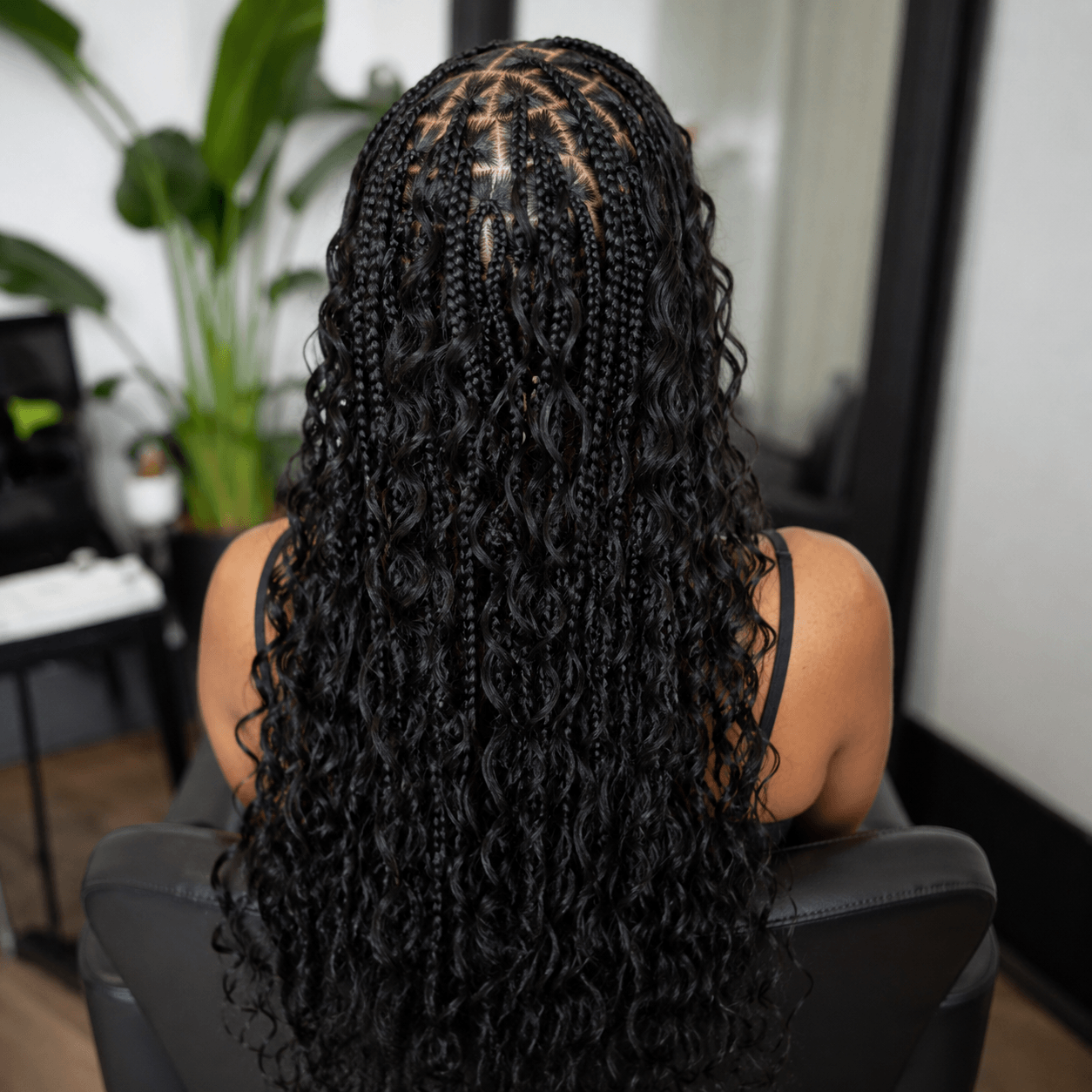
Boho-inspired designs often combine braids with loose curls, creating movement and a textured finish that differs from traditional box and knotless styles.
Two styles described as Goddess braids may look different because the loose curly strands, extension hair materials, and placement are not identical. Customers interested in Goddess Braids in West Houston should confirm the exact style and required hair before their appointment.
For some Goddess or Boho appointments, clients must supply wavy human-hair extensions because the salon does not stock the hair required for those designs. Checking this ahead of time and bringing the right extensions can prevent unexpected changes on appointment day. Ask about caring for the free-flowing curls as well, since their maintenance may differ from that of the finished braids. Checking the hair requirements before the appointment can prevent a planned style from changing simply because the necessary material is missing.
Braiding Choices for Different Members of the Family
There is no single braid style that meets every family member’s needs. Some customers want a practical protective hairdo for everyday wear. Others prefer intricate patterns, twists, or a distinctive look for a important occasion.
WOW African Hair Braiding serves women, men, and children in Houston’s Westchase and Briar Forest area. Its Westheimer braiding services include traditional and contemporary styles, with knotless and box-braid styles among the available options.
A Better Appointment Starts With the Right Questions
A little preparation can make a braiding consultation more useful. Save a few inspiration photos, including examples of the braid size and finished length you prefer. The clearer your reference photographs are about size and length, the easier it becomes to discuss what you want before installation begins.
Be sure to mention past scalp discomfort, sensitivity, or painful installations. A beautiful result matters, but so does the experience of wearing it. Choose a look that works with your daily activities, takes your your own hair into account, and does not sacrifice comfort for the photograph. The aim is to leave with braids you enjoy wearing, not merely a design that looks impressive immediately after the appointment.